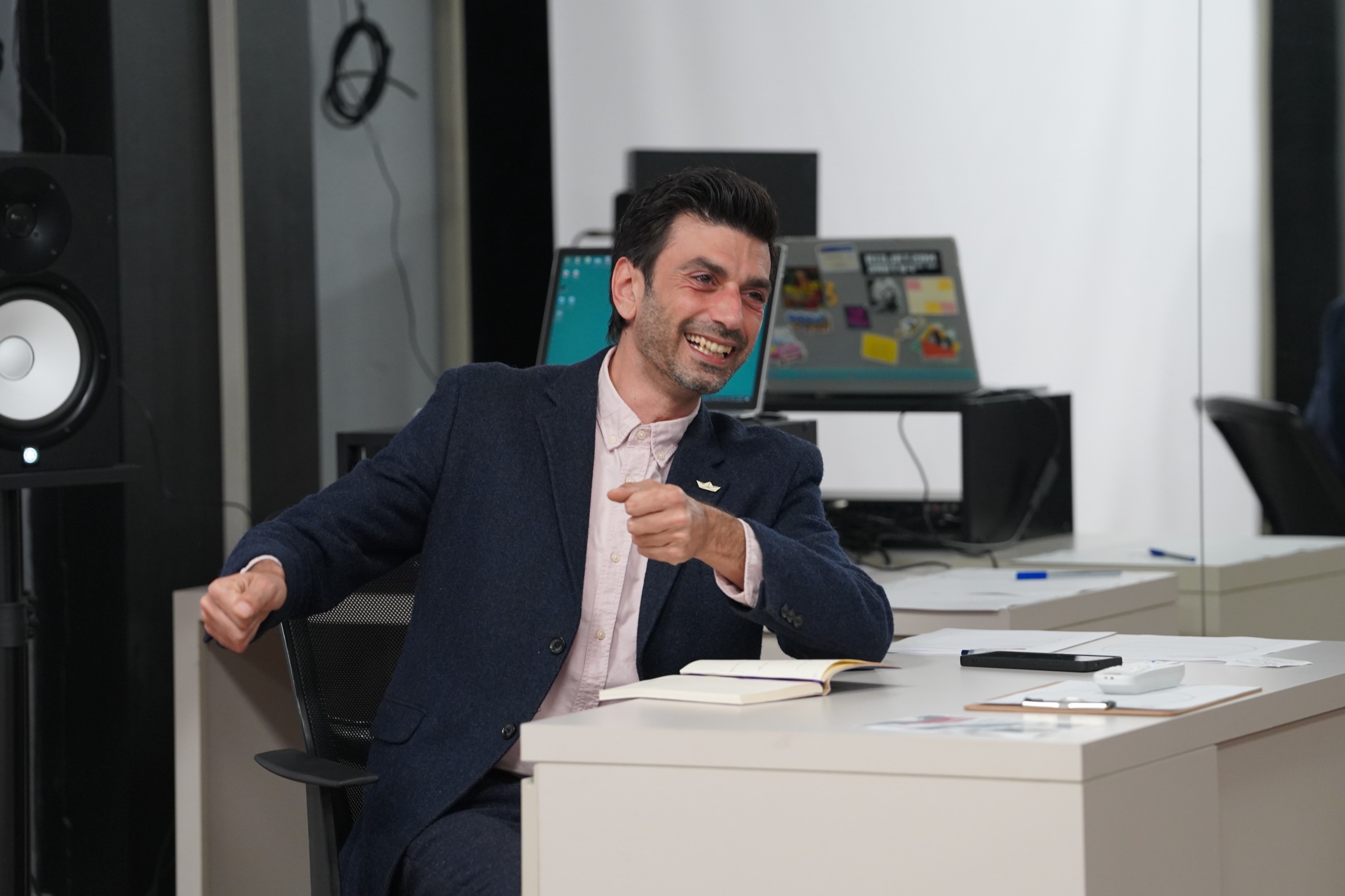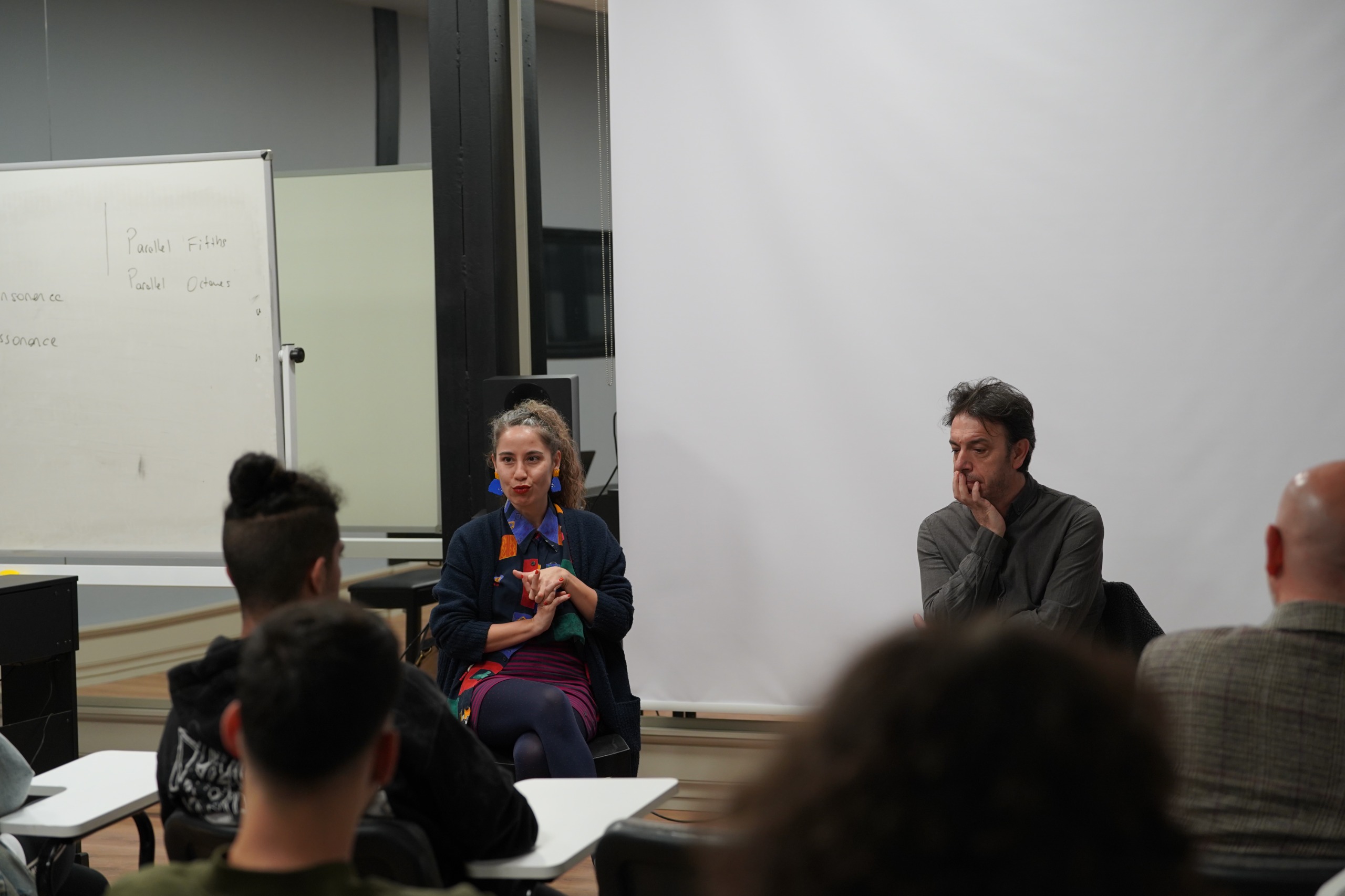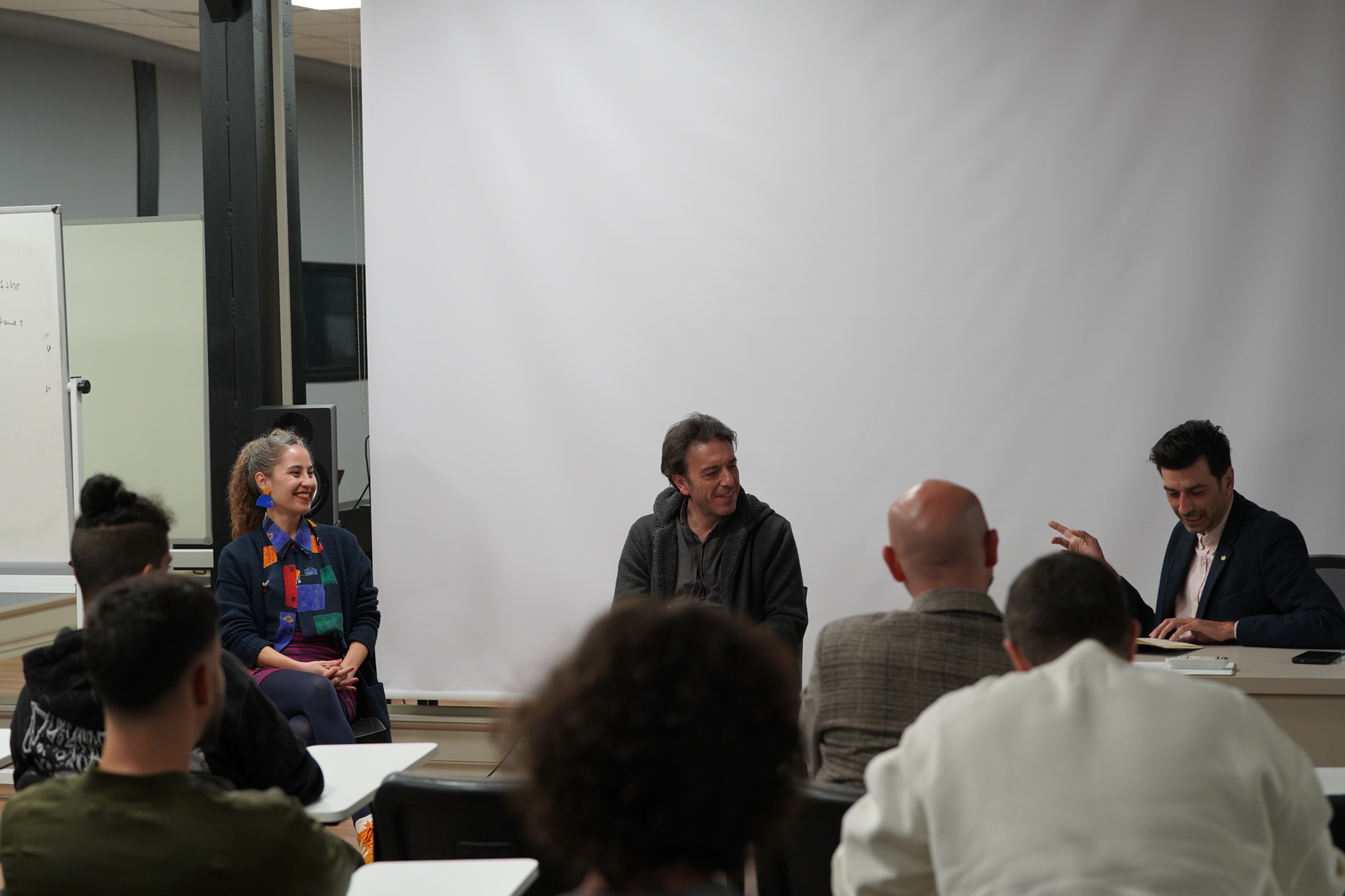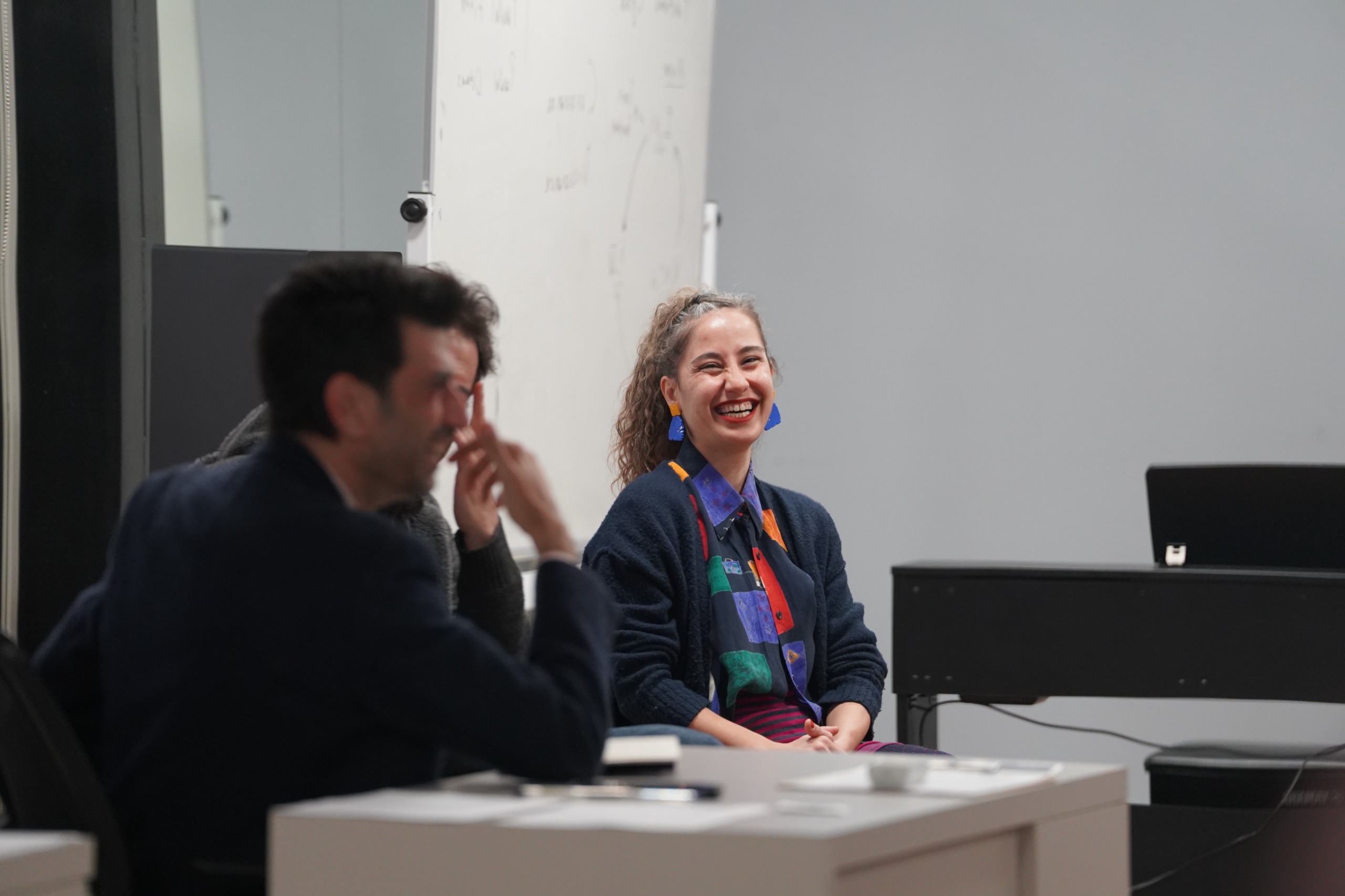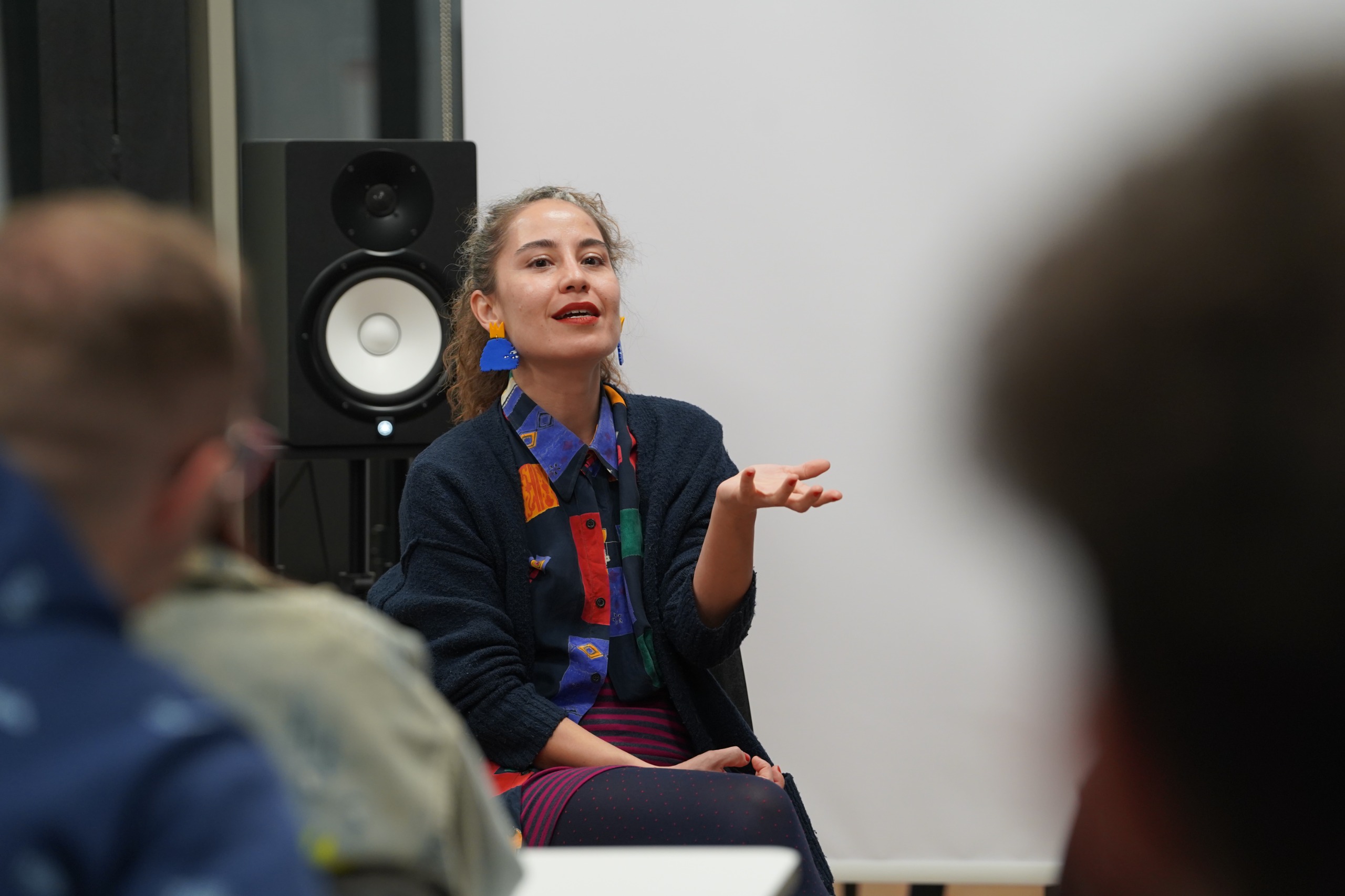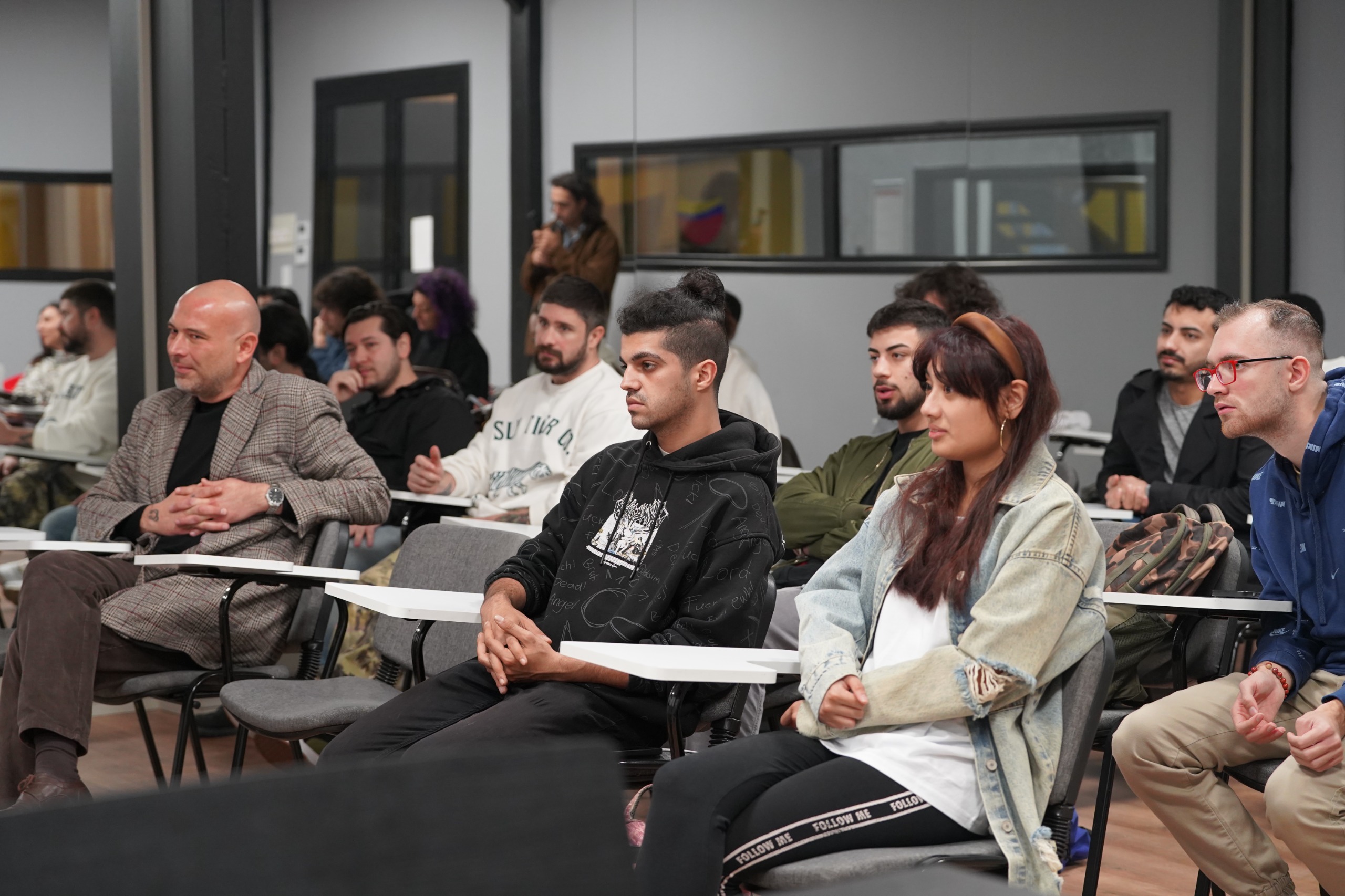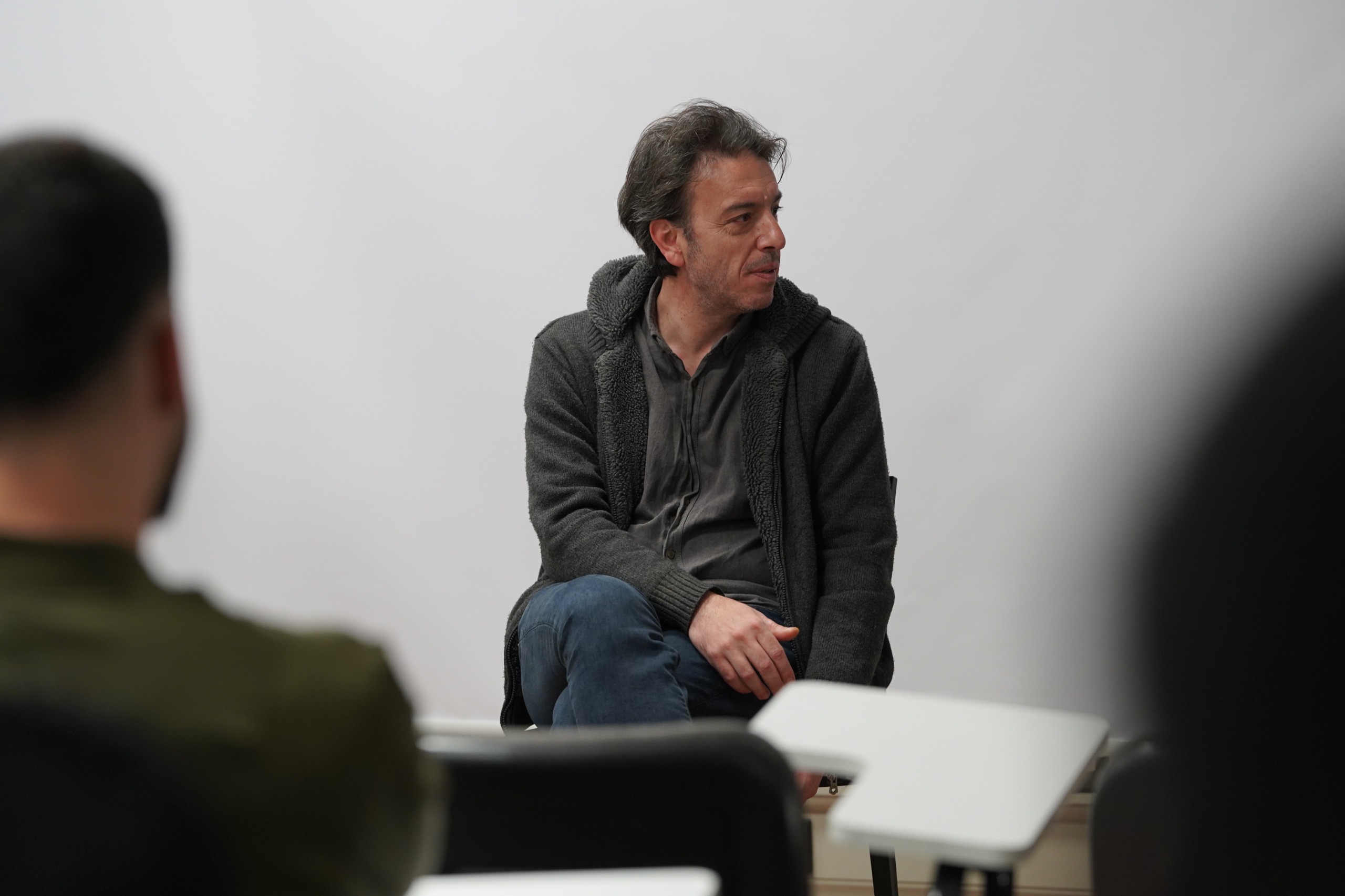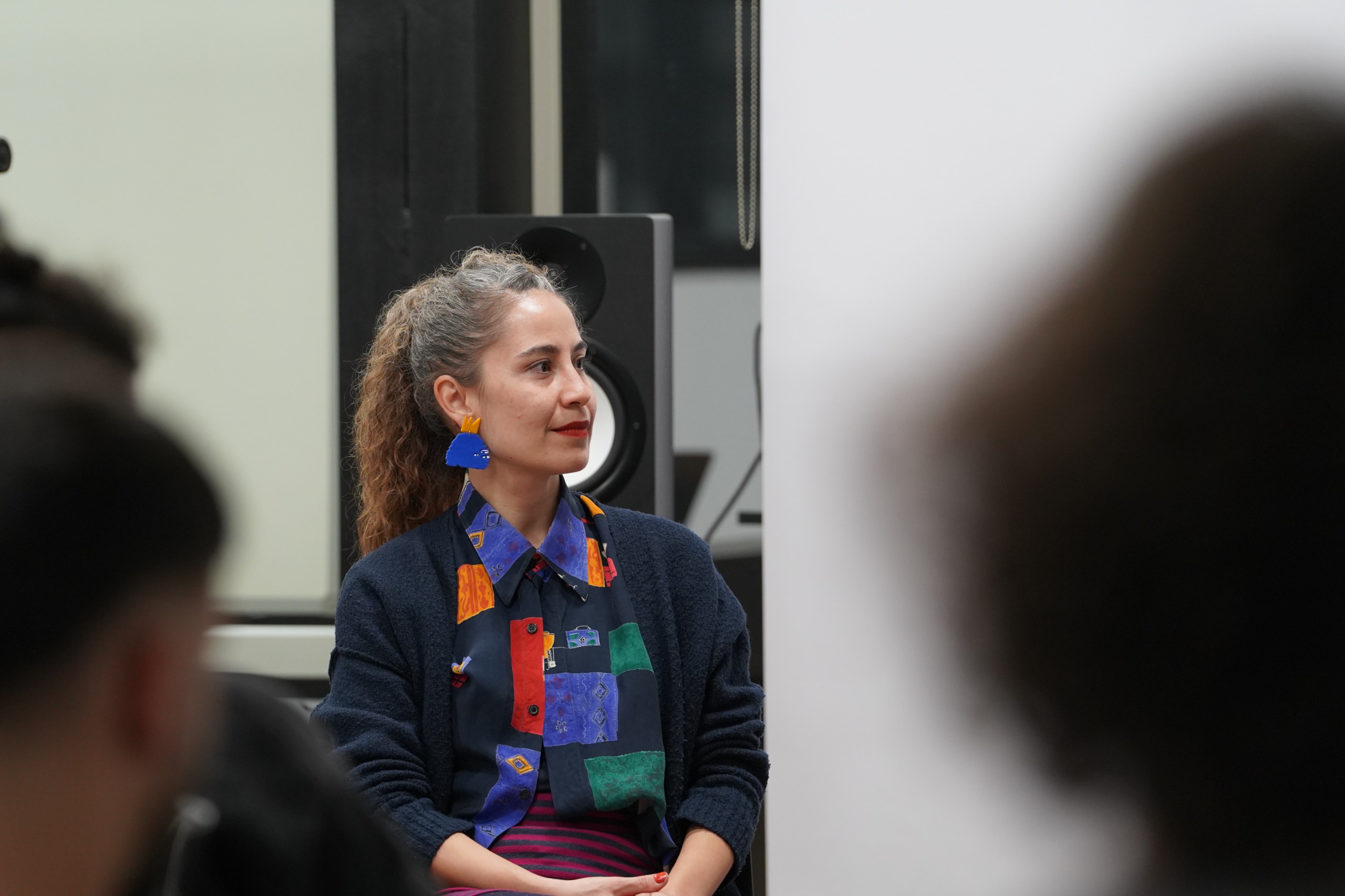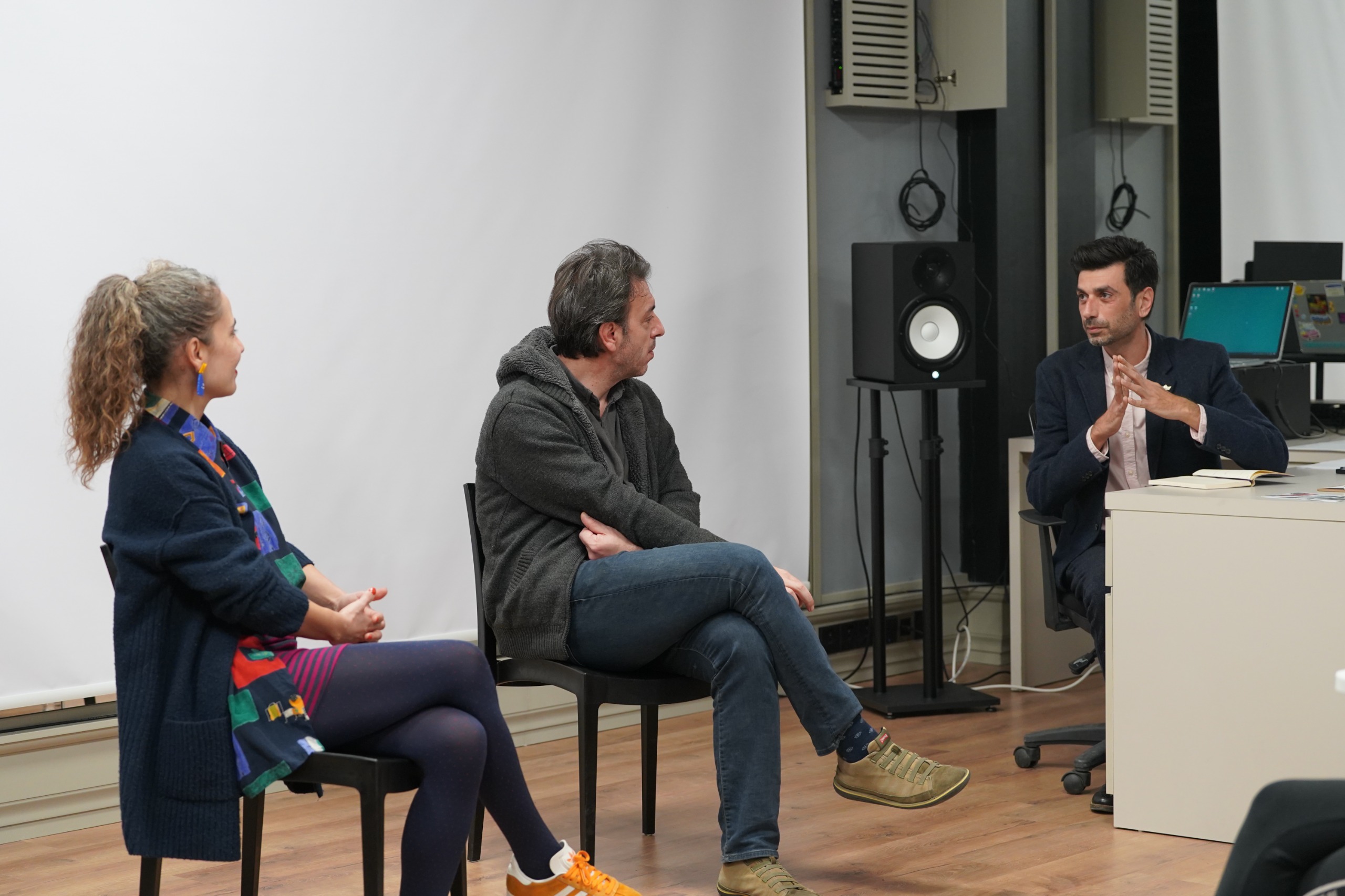

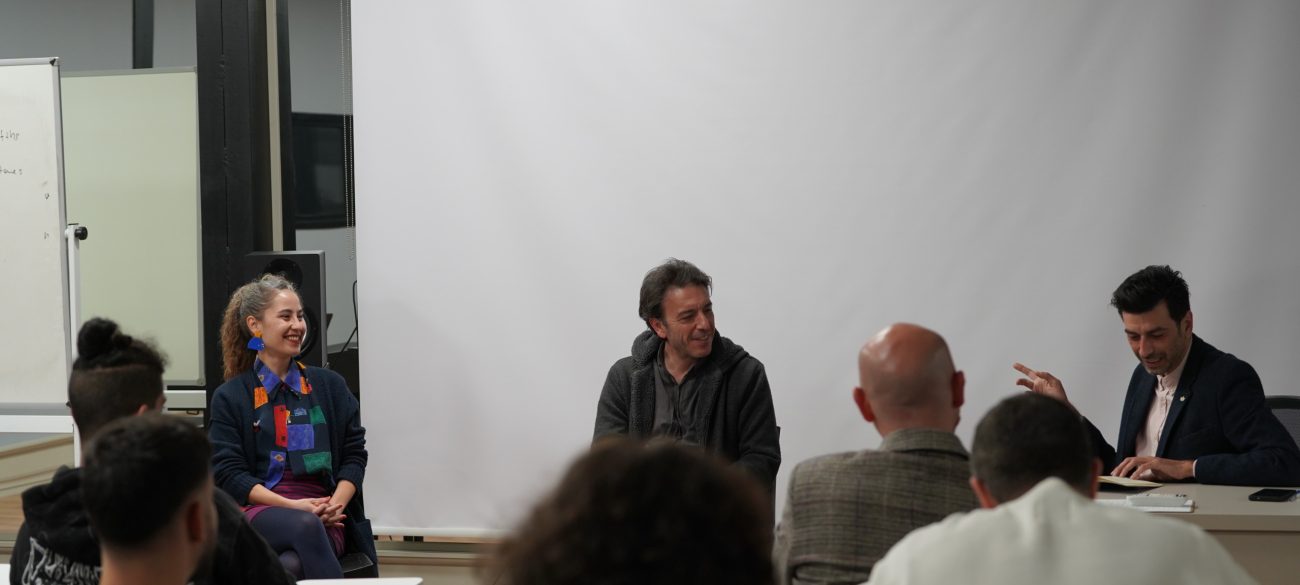
Arkin University of Creative Arts and Design (ARUCAD) hosted the seminar “Interdisciplinary Performance Dynamics,” focusing on interdisciplinary production practices in the performing arts. The seminar featured interdisciplinary performance artist Çağıl Kaya and jazz musician Tamer Temel as speakers, and was moderated by Asst. Prof. Dr. İnal Bilsel and Şafak Ersözlü. The event was structured around experience sharing and a question-and-answer session.
In the opening part of the seminar, Çağıl Kaya emphasized that their interdisciplinary practices are not based on fixed definitions of right or wrong. Defining their artistic approach through experience and process, Kaya stated: “We are not people who claim ‘this is the only way’ or ‘this is the correct method.’ We only talk about what we have experienced and what has worked for us.”
Referring to the absence of dominant artistic movements in contemporary practice, Kaya underlined that interdisciplinarity today offers both opportunities and challenges. Highlighting the importance of strong foundations, Kaya noted: “Being interdisciplinary is easy today, but if the foundation is weak, there is nothing left to combine. To break something, you first need to know exactly what it is.”
Tamer Temel addressed the risk of interdisciplinarity becoming a superficial trend, stressing that transitions between genres should emerge from genuine expressive needs rather than popularity or expectations. Temel explained: “Adding a rock or pop element is not the issue. The real question is whether you actually need another discipline to express what you want to say.”
Focusing on the distinction between artistic creation and what follows after, Temel pointed out that genre classification and market-related concerns belong to the post-production phase of an artwork: “Once a work is produced, concepts such as genre, classification, and sales come into play. These are related more to the marketing process than to the artwork itself.”
In discussions on education and pedagogy, Çağıl Kaya argued that traditionally disciplined teaching approaches should not be viewed solely as restrictive. Emphasizing the necessity of learning the fundamental language of a discipline, Kaya stated: “Before saying ‘I am creating my own style,’ one needs to learn the grammar of the field. Without a shared alphabet, communication remains shallow.”
In the final part of the seminar, Tamer Temel reflected on Eastern and Western artistic traditions, touching upon the balance between individuality and anonymity. He emphasized that interdisciplinarity should be built on depth of expression rather than genre labels: “In Eastern traditions, becoming anonymous—being part of a greater whole—can be a form of freedom. What makes interdisciplinarity valuable is not mixing genres, but bringing together depth and expression.”
The “Interdisciplinary Performance Dynamics” seminar concluded with participants’ questions and contributions, offering a shared space for reflection on interdisciplinary production, expression, and educational practices in contemporary performing arts.