Pattern Literacy: Read, Cut, Sew – Unisex Vest Production
Organized by the Arkın University of Creative Arts and Design (ARUCAD) Department of Textile and Fashion Design, the workshop titled “Pattern Literacy: Read, Cut, Sew – Unisex Vest Production” was held as a practice-based learning experience that approached patternmaking as both a design language and a production tool.
The workshop was conducted under the guidance of Lecturer Şansım Televi Boğa and aimed to enable participants to experience pattern literacy on both theoretical and practical levels. Moving beyond the use of ready-made patterns, the workshop focused on how patterns can be read, interpreted, and transformed within the design process.
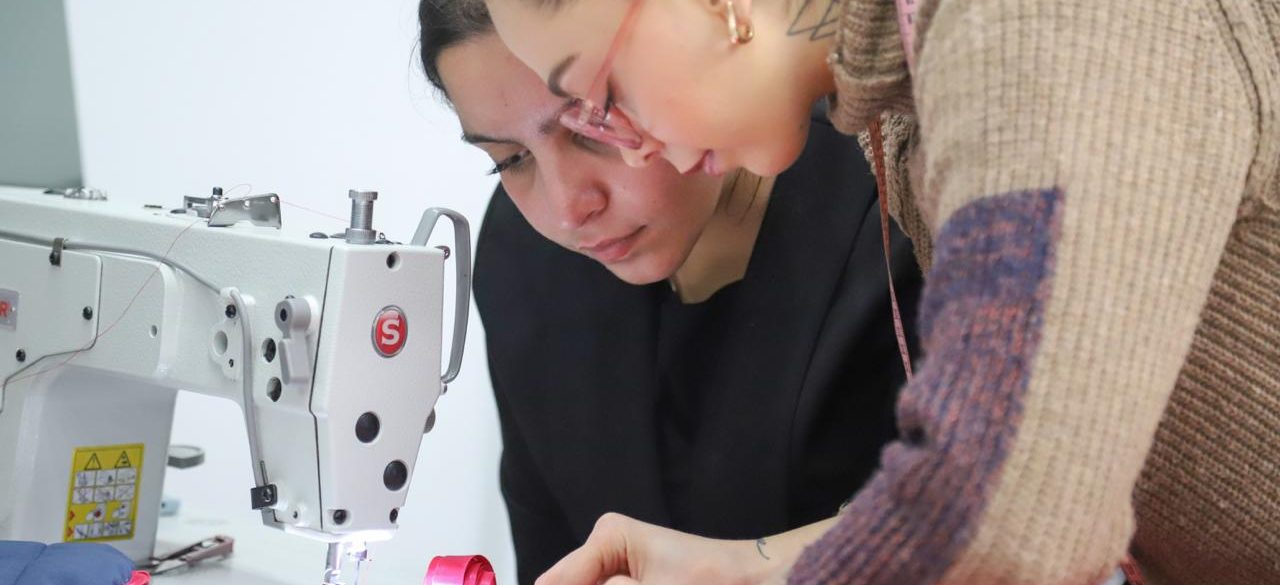
Throughout the workshop, participants took part in each stage of production through the design of a unisex vest. Pattern reading, fabric placement and cutting techniques, as well as fundamental sewing processes were applied hands-on. The workshop emphasized understanding the relationship between pattern, body, and form, integrating a gender-neutral design approach into production, and encouraging students to take an active role in design decisions.
The workshop offered students multidimensional gains on both technical and conceptual levels. Participants developed the ability to perceive patterns not merely as applied schemes but as readable and reconfigurable systems, while experiencing the transition from two-dimensional patterns to three-dimensional forms. Awareness of unisex design and body inclusivity was strengthened, and basic cutting and sewing techniques were reinforced through practice. Throughout the process, the learning-by-making approach aimed to strengthen the relationship between manual skills and intellectual production.
Key concepts highlighted during the workshop included pattern literacy, the relationship between body, form, and movement, learning by making, simplification and functionality in design, and the designer’s role as an active agent within the production process. In this context, the importance of addressing technical knowledge in fashion design alongside critical thinking was emphasized.
Drawing attention to the role of patterns within the design process, Televi Boğa emphasized that “the pattern is not the limit of design, but a tool that makes the designer’s way of thinking visible,” noting that as pattern literacy develops, designers gain a freer approach to the body and form. Boğa also stated that this process transforms production beyond a purely technical practice into a creative design experience.