

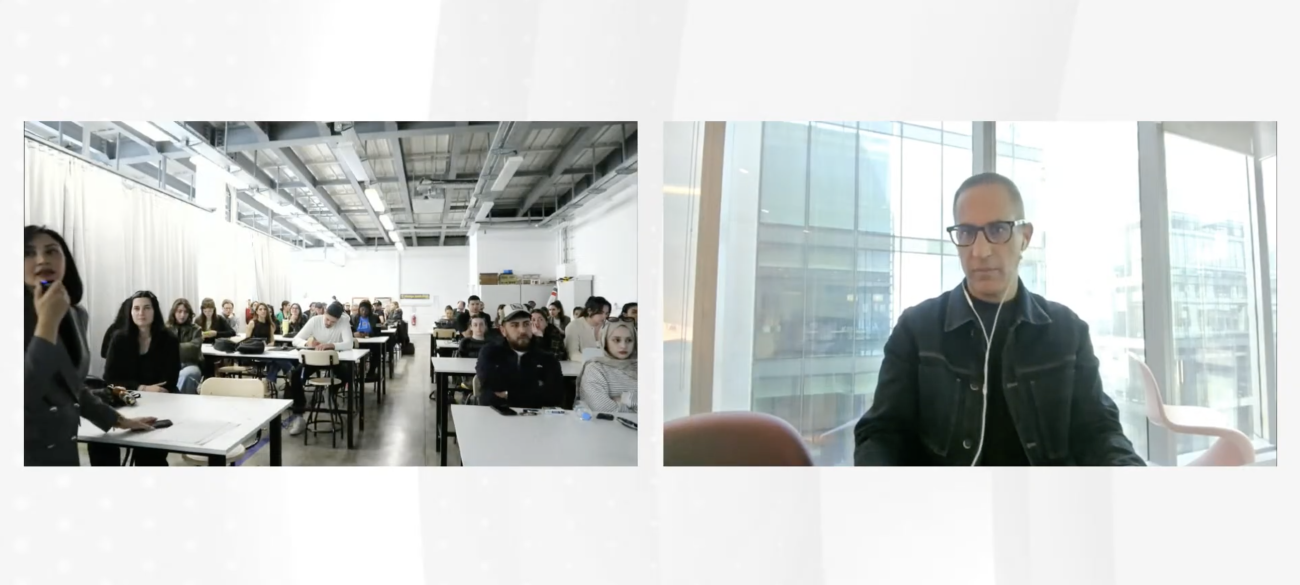
A webinar titled “Reshaping the Cities & Communities,” organized by the Interior Architecture and Environmental Design Department at Arkin University of Creative Arts and Design, was held on Wednesday, April 1, 2026, at IR SDE03. Featuring architect and designer Tariq Khayyat as the speaker, the session explored how architecture extends beyond physical structures to shape social connections and human experience.
The seminar focused on human-centered design, discussing how cities and communities can be reimagined through more inclusive, responsive, and interactive spatial practices. It provided a comprehensive perspective on how architecture functions as a tool for strengthening user experience and fostering meaningful social interaction.
Drawing from his professional journey, Tariq Khayyat shared insights into the role of architecture in constructing meaning, engaging users, and building communities. He also emphasized the growing importance of designing spaces that respond to both social and environmental needs in contemporary practice.
The webinar offered ARUCAD students an opportunity to rethink the interdisciplinary nature of architecture and its societal impact, highlighting the importance of human-centered design in shaping future spatial practices.
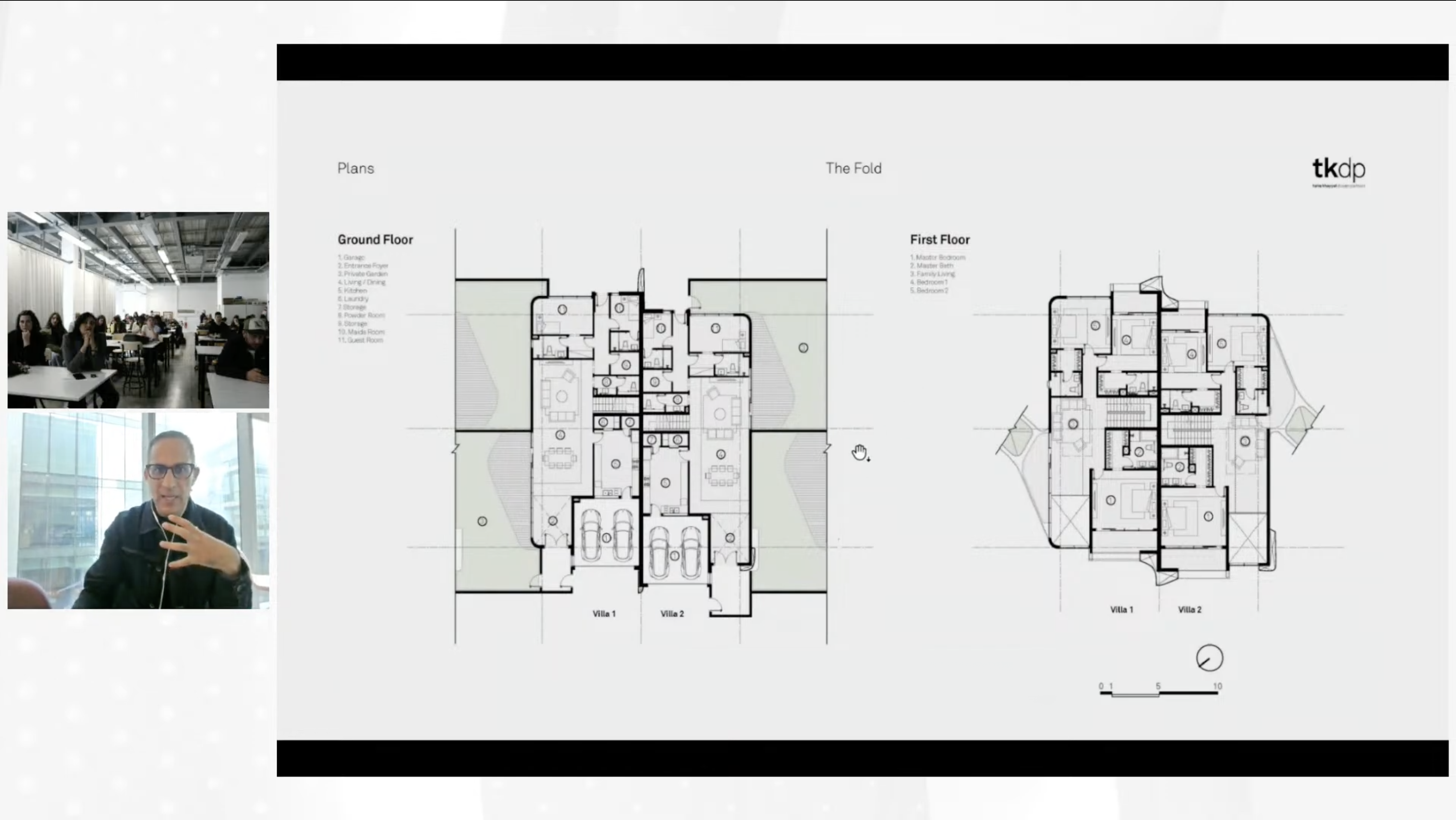
The seminar focused on human-centered design, discussing how cities and communities can be reimagined through more inclusive, responsive, and interactive spatial practices. It provided a comprehensive perspective on how architecture functions as a tool for strengthening user experience and fostering meaningful social interaction.
Drawing from his professional journey, Tariq Khayyat shared insights into the role of architecture in constructing meaning, engaging users, and building communities. He also emphasized the growing importance of designing spaces that respond to both social and environmental needs in contemporary practice.
The webinar offered ARUCAD students an opportunity to rethink the interdisciplinary nature of architecture and its societal impact, highlighting the importance of human-centered design in shaping future spatial practices.