

ENGLISH PREPARATORY
SCHOOL
Programme Type
English Preparatory School
Duration
1 Semester to 4 Semester
Director
Hatice Asvaroğlu

Sen. Ins. Hatice Asvaroğlu
Director
English Preparatory School
Dear EPS Students,
It is my great pleasure to welcome you to the English Preparatory School at ARUCAD and congratulate you on becoming part of our academic community.
By choosing ARUCAD, the first and only English-medium Creative Arts University in Northern Cyprus, you have taken an important step towards your academic and professional future. At ARUCAD, you will not only have the opportunity to develop your artistic talents and creativity, but also strengthen your English language skills, which will support you throughout your studies and future career.
At the English Preparatory School, our main aim is to help you develop the English language proficiency, academic skills, and effective study habits you need to succeed at university and beyond. However, our goal goes beyond learning English. Through learner-centred, communicative, and project-based activities, we aim to provide you with the knowledge, skills, and values needed to thrive in today’s diverse and rapidly changing world.
Through class discussions, presentations, collaborative projects, and problem-solving tasks, you will develop important skills such as critical thinking, creativity, communication, teamwork, and digital literacy. You will also learn to appreciate cultural diversity, work effectively and respectfully with others, and become responsible global citizens prepared for lifelong learning and future employment.
Our programmes are aligned with international standards and the Common European Framework of Reference for Languages (CEFR). They are delivered by highly qualified and experienced instructors who use innovative teaching methods and modern technologies to create an engaging and supportive learning environment.
Dear students, your success will largely depend on your commitment, motivation, and active participation. Please attend your classes regularly, participate actively, practise English whenever you can, and never hesitate to seek support from your teachers. Remember that learning a language is a journey, and every effort you make will bring you one step closer to your goals.
Once again, welcome to ARUCAD and the English Preparatory School. We wish you every success in your academic journey and look forward to supporting you throughout your studies.
With sincere regards and best wishes,
History
Arkın University of Creative Arts and Design (ARUCAD) is a private, non-profit higher education institution which was established in 2017 in the center of the ancient port city of Kyrenia, Northern Cyprus. ARUCAD started offering courses in the Academic Year 2018-2019 and provides education in the fields of Art, Design and Communication. Since then, ARUCAD has continually been improving its quality standards and aiming to obtain new memberships of international accreditation organizations to help its students to be a part of the global Art, Design and Communication network.
English Preparatory School was established and started offering English language courses in 2018 along with the establishment of ARUCAD. The student intake to the English Preparatory School has increased each academic year over the three-year period and currently, over 100 students are registered for English language courses at EPS. In line with ARUCAD’s vision, EPS aims to continuously develop to achieve a high-quality English language education which meets the international foreign language teaching standards to help ARUCAD students to succeed in their academic studies, professions and social lives. Overall, EPS, as one of its important units of ARUCAD has a diverse cultural learning environment where students can share their own cultures in a friendly academic environment and develop multicultural understanding to integrate into the global world successfully.


Overview
Arkın University of Creative Arts and Design is an English medium university and English Preparatory School is a unit within ARUCAD which is directly attached to the Rectorate. The English Language proficiency requirement for students to be able to directly commence their academic studies at the Faculty is CEFR B1 for undergraduate and CEFR B2 for master’s and Ph. D students. EPS was established with the aim of providing English language courses for newly admitted ARUCAD students who are not at the required English language proficiency levels to successfully pursue their academic studies at the Faculty. EPS offers English language courses to these students at four different levels of English; Prep A1, Prep A2, Prep B1 and Prep B2 levels to enhance their English language knowledge and skills to the required English language levels in order to enable them to succeed in their academic studies at the Faculty. Students can complete their studies at each level in minimum one semester. The exit levels for undergraduate students is CEFR B1 whereas CEFR B2 for master’s and Ph. D students is required. The duration of standard education at EPS is minimum one year and maximum 2 years.
EPS Mission
The mission of the English Preparatory School (EPS) at ARUCAD is to provide high-quality, inclusive English language education that enables students from diverse linguistic and cultural backgrounds to communicate effectively and succeed in their interdisciplinary studies.
In line with ARUCAD’s focus on art, design, communication and creative practice, EPS develops students’ general and academic English proficiency, learner autonomy, critical and creative thinking, collaboration skills, intercultural awareness and understanding of sustainability.
EPS fulfils its mission through the following principles:
Providing high-quality English education aligned with international standards;
Creating an inclusive, collaborative, and supportive learning environment;
Promoting learner autonomy, agency, and lifelong learning;
Integrating sustainability literacy into language education;
Encouraging creativity, critical thinking, and responsible communication;
Respecting linguistic, cultural, and individual diversity;
Supporting staff’s continuing professional development;
Upholding integrity, equality, transparency, and ethical responsibility;
Raising awareness regarding the importance of cultural heritage.
EPS Vision Statement
EPS aspires to be a locally and internationally recognised centre of excellence in English language education, preparing independent learners, creative thinkers, and responsible global citizens who contribute to inclusive and sustainable societies.
Core Values
- Quality: High standards in teaching, learning, assessment, and student support.
- Sustainability: Environmental, social, cultural, and economic responsibility.
- Learner autonomy and agency: Ownership of learning and informed decision-making.
- Creativity and innovation: Inquiry, imagination, and interdisciplinary thinking.
- Inclusion and respect: Equitable opportunities, cultural understanding, and respect for diversity.
- Integrity and transparency: Ethical conduct, accountability, and consistent practice.
- Collaboration: Cooperation and shared responsibility.
Continuous development: Reflective practice and ongoing professional and institutional improvement.
EPS Objective
EPS aims to:
- develop students’ English proficiency in alignment with the Common European Framework of Reference for Languages (CEFR);
- develop the general and academic English skills required for ARUCAD’s interdisciplinary programmes;
- employ inclusive, student-centred, and evidence-informed teaching approaches;
- develop learner autonomy, agency, and responsibility;
- integrate sustainability literacy and the general principles of the SDGs into relevant learning activities;
- develop critical thinking, creativity, collaboration, problem-solving, and research skills;
- promote intercultural awareness, global citizenship, and respect for diversity;
- use appropriate technologies to enhance teaching, learning, and assessment;
- employ transparent, equitable, and varied assessment practices;
- support staff’s continuing professional development.
General Aims
Our principal aim is to bring students’ English language knowledge, skills and competencies to a level which will enable them to succeed academically, professionally and socially.
It is our mission to prepare our students for success in the global environment. Our aim is to promote the benefits of plurilingualism and multi-culturalism in language teaching and learning.
Learning Outcomes in Relation to General Aims
To implement, monitor and evaluate established and new approaches in the classroom.
To get students actively engaged into their learning by using state-of-the-art technology and self-assessment.
To increase student investment in the learning processes both in and out of the classroom.
To design course content and ensure that course delivery caters for all learning styles, students’ interests and needs.
To keep the level of the language being taught relevant to the student’s levels and needs.
Total Hours of Teaching and Learning
Total Hours of Teaching and Learning
Table 1: Total hours of English language teaching and learning
| CEFR Level | The number of total guided teaching hours required to attain a CEFR proficiency level according to The Association of Language Testers of Europe (ALTE) | The number of total guided teaching hours allocated in each course level at EPS if a student starts from CEFR A1 level |
|---|---|---|
| CEFR A1 | Approximately 90–100 hours | 140 hours |
| CEFR A2 | Approximately 180–200 hours | 280 hours |
| CEFR B1 | Approximately 350–400 hours | 560 hours |
| CEFR B2 | Approximately 500–600 hours | 840 hours |
Classes typically accommodate 35–40 students. Modern educational technology is integrated into English language courses to support learning and encourage learner autonomy. EPS English language programs offers at least 24 lessons per week at each proficiency level, except PREP A2, which offers 22 lessons per week. Each lesson lasts 50 minutes.
Students must attend at least 70% of their English classes. Students who do not meet this requirement are not eligible to take the final examination or the English Proficiency Examination and must repeat their English language course.
EPS English language learners will achieve the learning outcomes presented in the ‘Course Content’ tab at the end of their English language studies at different proficiency levels.
Exemption Criteria
ARUCAD’s English Preparatory School Exemption Criteria
Amendments: Senate No. 2023/10 and 2024/6; dates: 30/11/2023 and 26/09/2024.
| Name of the Test | Minimum Grades Required for Undergraduate Studies — B1 CEFR | Minimum Grades Required for MA/MSc Studies — B2 CEFR | Validity of the Exam Results | SOFL101/INGL101 Exception Condition* | SOFL102/INGL102 Exception Condition* |
|---|---|---|---|---|---|
| ELPE (ARUCAD’s English Language Placement Examination) | 60/100 | 80/100 | N/A | 75–87 | 88–100 |
| KPDS / ÜDS / YDS / YÖKDİL (Kamu Personeli Yabancı Dil Bilgisi Seviye Tespit Sınavı, Üniversitelerarası Kurul Yabancı Dil Sınavı, Yabancı Dil Bilgisi Seviye Tespit Sınavı / Yükseköğretim Kurumları Yabancı Dil Sınavı) | 50 | 70 | 5 Years | 70–89 | 90–100 |
| IELTS (International English Language Testing System) | Minimum 5.0 | Minimum 6.00 | 2 Years | 5.5–6.0 | 6.5–7.0 |
| TOEFL iBT (Internet-based Test of English as a Foreign Language) | Minimum 60 | Minimum 70 | 2 Years | 72–94 | Minimum 95 |
| TOEFL CBT (Computer-based Test of English as a Foreign Language) | Minimum 170 | Minimum 197 | 2 Years | 173–233 | Minimum 234 |
| TOEFL PBT (Paper-based Test of English as a Foreign Language) | Minimum 497 | Minimum 530 | 2 Years | 533–587 | Minimum 588 |
| English Language GCE/IGCSE (General Certificate of Education / International General Certificate of Secondary Education) | Minimum C | Minimum B | Indefinite validity | B | A/A* |
| FCE (First Certificate in English) | Minimum C | Minimum B | Indefinite validity | B | A |
| CPE/CAE (Certificate of Proficiency in English / Certificate of Proficiency in English) | Minimum C | Minimum B | Indefinite validity | B | A |
| SAT (The SAT Reasoning Test) | Reading & Writing: Minimum 420 | Reading and Writing: Minimum 440 | 5 Years | 500–600 | >600 |
| PTE (Pearson Test of English) | Minimum 45 | Minimum 71 | 2 Years | 51–58 | Minimum 59 |
| English Language WAEC — WASSCE (West African Examinations Council); WAEC | Minimum C6 | Minimum C5 | 2 Years | B3 | B2 and A1 |
| NECO (National Examination Council of Nigeria) — NECOSSCE; SSCE | Minimum C6 | Minimum C5 | 2 Years | B3 | B2 and A1 |
| ZIMSEC (Zimbabwe School Examinations Council) | Minimum C6 | Minimum C5 | 2 Years | B | A |
| City and Guilds International English Exam | Minimum B1 First Class Pass | Minimum B2 Pass | 2 Years | N/A | N/A |
| NSC (National Senior Certificate — South Africa) | Minimum 50% or 4 | Minimum 60% or 5 | 2 Years | Minimum 70%–79% or 6 | Minimum 80%–100% or 7 |
| KNEC (Kenya National Examination Council) | Minimum C | Minimum C+ | 2 Years | Minimum 60%–80% or B | Minimum 80%–100% or A |
| NECTA (CSEE) (The National Examination Council of Tanzania) | Minimum C | Minimum B | 2 Years | N/A | N/A |
| ECZ (Examination Council of Zambia) | Minimum 6 | Minimum 5 | 2 Years | Minimum 3 | Minimum 2 |
Refer to https://arucad.edu.tr/wp-content/uploads/2024/12/2.-ENGLISH-PREPARATORY-SCHOOL.pdf for more information and exemptions.
Assessment and Evaluation
Assessment and Evaluation at the English Preparatory School
Assessment and evaluation practices are an integral part of the teaching and learning processes at EPS. Assessment methods and techniques implemented at EPS primarily aim to support students’ learning (assessment for learning) as well as measuring students’ learning (assessment of learning). For example, EPS students are assessed by a number of ongoing assignments (formative assessment) such as midterms, essay writing and presentation projects. Over the course of the semester to help them further improve their English language learning whereas a number of summative exams such as Final Exams and English Proficiency Exams are given at the end of students’ studies, which evaluate whether the students have developed required English language proficiency to commence their academic studies at the Faculty. These two different types of assessment and evaluation methods and techniques, namely formative and summative assessment aim to provide EPS learners with equal opportunities to be successful in their English language learning journeys and obviously, academic studies.
Needless to say, we, at EPS, primarily aim to develop our students’ ability to effectively communicate in speech and writing in English language academically, professionally and socially. To this end, we focus on teaching and assessing our students’ learning in four integrated language skill areas, namely Reception (listening and Reading Reception), Production (Spoken and Written Production), Interaction (Spoken and Written Interaction), and Mediation equally. More specifically, all our exams aim to assess our students’ communicative abilities in these integrated skill areas, and each skill area is being equally weighted. With respect to types of exams, we assess our students by “Portfolio assessment (% 30)”, “Mid-term Exam (% 30)” and “Final Exam (% 40)”. Prep B1/B2 students who successfully complete their B1 studies are required to take an English Proficiency Test at the end of their Prep B1/B2 levels.
With respect to Portfolio assessment, it includes the students’ assignments pursued throughout the semester. For example, essay writing, projects, presentations, students’ attendance and participation to classes, workshops organized by the Faculties, online tasks and activities etc. Students sit mid-term exams after 7-8 weeks of instruction and final exams after 16 weeks of instruction. The durations of the written English language examinations are usually between 90 and 120 minutes. The place, time and format of the exams are announced in advance to the students on notice boards a well as on Microsoft Teams.
Please find detailed information regarding the assessment processes, their content and weights in Tables 1, 2, 3, and 4 below. Please check EPS Student Handbook and Article 12 about EPS examinations and success in English Preparatory School Establishment, Operation and Working Principles By-law (hyperlinks are given)
Table 1: An overview of the EPS Formative and Summative Assessment–Prep A1 and Prep A2
| Method | Format | Weightage |
| Mid-Term Exams | Overall, the exam is divided into 4 components: listening, reading, language usage, writing and speaking. | 30 % |
| Final Exams | Overall, the exam is divided into 4 components: listening, reading, language usage, writing and speaking. | 40 % |
| Portfolio | The portfolio consists of attendance, participation, and class activities (10 %), role-playing video projects, (5 %), writing a biography / blog post (5 %), different kinds of presentations (5 %) and writing a composition (5 %). | 30 % |
| Total | 100 % |
Table 2: An Overview for EPS Formative and Summative Assessment – Prep B1 & Prep B2
| Method | Format | Weightage |
| Mid-Term Exams | Overall, the exam is divided into 4 sections, i.e., listening, reading, language, writing and speaking. | 30 % |
| Final Exams | Overall, the exam is divided into 4 sections, i.e., listening, reading, language usage, writing and speaking. | 40 % |
| Portfolio |
The portfolio consists of attendance, participation and class activities (10 %), essay writing (5 %), a promotion presentation (5 %) and presentation on a given topic (10 %). |
30 % |
| Total | 100 % |
All students at different English language proficiency levels are given a mid-term examination in seven or eight weeks’ time following the commencement of their semester studies and a final examination after 16 weeks of instruction. In addition, students are required to submit the assignments included in the portfolio assessment section in consideration with the deadlines shown on the weekly schemes of work which can be found on Microsoft Teams. A student’s end of semester final grade is the total of 30 % of the student’s midterm exam grade, 40 % of the student’s final exam grade and 30 % of the student’s portfolio assessment grade.
Prep B1 and Prep B2 students are also given an English Proficiency Exam at the end of their Prep B1 and Prep B2 studies in order to be eligible to commence their academic studies at the faculty. The English Proficiency Exam is administered at the end of each semester and the beginning of the Fall semester. Students, who are unable to obtain a pass grade from this exam, will repeat their studies at EPS. Prep B1 and Prep B2 final proficiency exam grade is the combination of 60 % of the total score they obtain from the English Proficiency Examination and 40 % of their end of semester final grade (30 % of Portfolio assessment, 30 % of Midterm Examination, and 40% of Final Exam).
English Proficiency Exam
English Proficiency Examination — CEFR B1/B2
The examination assesses students’ ability to understand and use English in academic and everyday contexts. Texts, tasks and assessment criteria are selected according to the target proficiency level, with appropriate differences in complexity, linguistic range and expected performance between B1 and B2.
| Assessment component | Marks | Assessment focus and task types |
|---|---|---|
| Oral Comprehension and Mediation | 20 | Listening tasks assess understanding of main ideas, relevant details and the organisation of spoken information. Integrated listening, note-taking and paragraph-writing tasks assess students’ ability to identify, select and communicate key information from a spoken source accurately and coherently. |
| Reading Comprehension | 20 | Reading tasks assess understanding of main ideas, supporting details, text organisation and meaning in context. Texts and questions reflect the target level, including the interpretation of viewpoints and implied meaning where appropriate. |
| Written Production and Interaction | 20 | Extended writing tasks assess students’ ability to organise and develop ideas coherently. Written interaction tasks require an appropriate response to a message or contribution, such as an email, blog post or letter of complaint. Assessment considers task fulfilment, organisation, linguistic range and accuracy, and appropriateness of register. |
| Oral Production and Interaction | 20 | Individual speaking and interactive tasks assess students’ ability to describe experiences, explain ideas, express and justify opinions, and respond to others in social and academic contexts. Assessment considers linguistic range and accuracy, fluency, coherence, interaction and intelligibility. |
| Language Use in Context | 20 | Contextualised tasks assess students’ understanding and use of vocabulary, grammatical structures and functional language to communicate meaning appropriately in everyday and academic situations. |
| Total | 100 |
The medium of instruction at ARUCAD is English language. English Preparatory School offers intensive English language courses which aim to equip newly admitted ARUCAD students with CEFR B1/CEFR B2 English language proficiency levels to enable them to successfully pursue their academic studies at their chosen Faculties. To this end, EPS offers a high-quality English language program which is well aligned to the Common European Framework of Reference for Languages (CEFR). A great importance is attached to support ARUCAD students in developing effective oral and written communication skills through an integrated skill curriculum, which fosters active and independent learning. All the educational processes and materials including English language proficiency levels, curriculum, syllabus, assessment and course materials are closely aligned with the CEFR and Pearson’s Global Scale of English since both of these international foreign language teaching frameworks are deemed as reliable, accurate and well-recognized standards which promote high quality, and effective English language teaching and learning.
The intensive English language course at the English Preparatory School is designed to help students to achieve a CEFR B1 level of proficiency in the English language for undergraduate students and CEFR B2 level English language proficiency for graduate students. Accordingly, EPS offers four levels of intensive English language instruction, Prep A1, Prep A2, Prep B1, and Prep B2, correlated with the Common European Framework of Reference for Languages (CEFR).
Newly admitted ARUCAD students can start their English language learning journey at Prep A1 level and finish at either Prep B1 or Prep B2 level. Each level, except for Prep A1+Prep A2 courses, can be completed in one semester. It is possible to complete a combination of Prep A1 and Prep A2 courses in one semester but this is not possible for other levels. It should be noted that, many factors such as students’ motivation, attendance and participation to courses, their reasons or purpose for learning the English language and the amount of time spent on individual study have impacts on students’ English language learning and achievements. Furthermore, the number of hours different learners need to develop English language proficiency at different levels greatly depends on a range of other factors such as student’s age and motivation, background, amount of prior study and the extent of exposure to the language outside the classroom. Learning a language is like climbing a mountain: the ascent gets harder the higher you climb: It does not take the same time to reach each level.
Can understand the main ideas of complex texts on both concrete and abstract topics, including technical suggestions in his/her field of specialization.
Can interact with a degree of fluency and spontaneity that makes regular interaction with native speakers quite possible without strain for either party.
Can produce clear, detailed texts on a wide range of subjects and explain a viewpoint on a topical issue giving the advantages and disadvantages of various options.
Can understand the main points of clear standard input on familiar matters regularly encountered in work, school, leisure, etc.
Can deal with most situations likely to arise while travelling in an area where the language is spoken.
Can produce simple connected text on familiar topics or of personal interest.
Can describe experiences and events, dreams, hopes and ambitions and briefly give reasons and explanations for opinions and plans.
Can understand sentences and frequently used expressions related to areas of most immediate relevance (e. g very basic personal and family information, shopping, local geography, employment).
Can communicate in simple and routine tasks requiring a simple and direct exchange of information on familiar and routine matters.
Can describe in simple terms aspects of his/her background, immediate environment and matters in areas of immediate need.
Can understand and use familiar everyday expressions and very basic phrases aimed at the satisfaction of needs of a concrete type.
Can introduce him/herself and others and can ask and answer questions about personal details such as where he/she lives, people he/she knows and things he/she has.
Can interact in a simple way provided the other person talks slowly and clearly and is prepared to help.
Sen. Ins. Hatice Asvaroğlu
Director

Özge Güzeltepe
English Language Instructor

Arif Celal Sözer
English Language Instructor
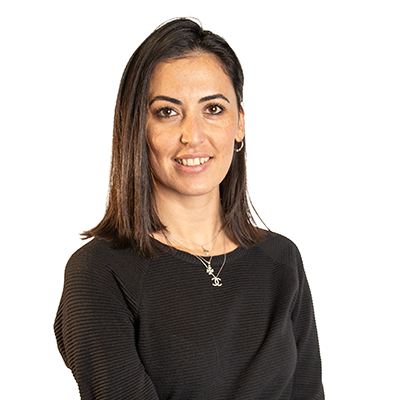
Yasemin Kılıç
English Language Instructor

Asu Uzbaşlı
English Language Instructor

Elvan Karabulut
English Language Instructor

Ayesha Shahid
English Language Instructor
- Question:What language proficiency exams are accepted for exemption from the English Preparatory School?
Answer: We accept internationally recognized exams such as TOEFL, IELTS, and Cambridge English exams. Check our admission guidelines for specific score requirements.
- Question:Is participation in the English Preparatory School mandatory for all students?
Answer: Yes, it is mandatory for students who haven’t met the university’s English language proficiency requirements.
- Question:How are classes structured in the English Preparatory School?
Answer: Classes are designed to improve listening, speaking, reading, and writing skills. The curriculum also includes cultural components to prepare students for a diverse academic environment.
- Question:Is there a final exam at the end of the English Preparatory School program?
Answer: Yes, students undergo a comprehensive final exam to assess their language proficiency before progressing to their degree programs.
- Question:What happens if a student doesn’t pass the English Proficiency Exam at the end of the program?
Answer: Students who do not pass the exam is required to repeat the English Preparatory School program for further language development.
- Question:What is the duration of the English Preparatory Program?
Answer: It depends on your level, if you are A1 / A2 it is a year, B1 is a semester term.
- Question:How are students placed into levels in the English Preparatory Program?
Answer: They take a placement exam at the beginning of the term. Based on their scores, they are placed into the appropriate level. Undergraduate students who score 60 or above can proceed directly to their department, while master students need to score 80 or above to do so.
- Question:Where can I learn the results of the Placement and Proficiency Exams?
Answer: The results can be found on the website. A link will be shared with you there.
- Question:Is there an attendance requirement in the English Preparatory Program?
Answer: Students are allowed a 30% absence rate for class.
- Question:When is the English Placement Test?
Answer: It is stated on the academic calendar which can be found on our website.
- Question:What steps should I take after completing the placement exam?
Answer:
- First please, check your grade from provided link.
- Purchase your books based on the grade / level received.
- Register for your course / level based on the grade you received. You must provide the book payment receipt during the registration. If you do not bring the receipt you will not be able to complete your registration.
Click here to download guideline
