

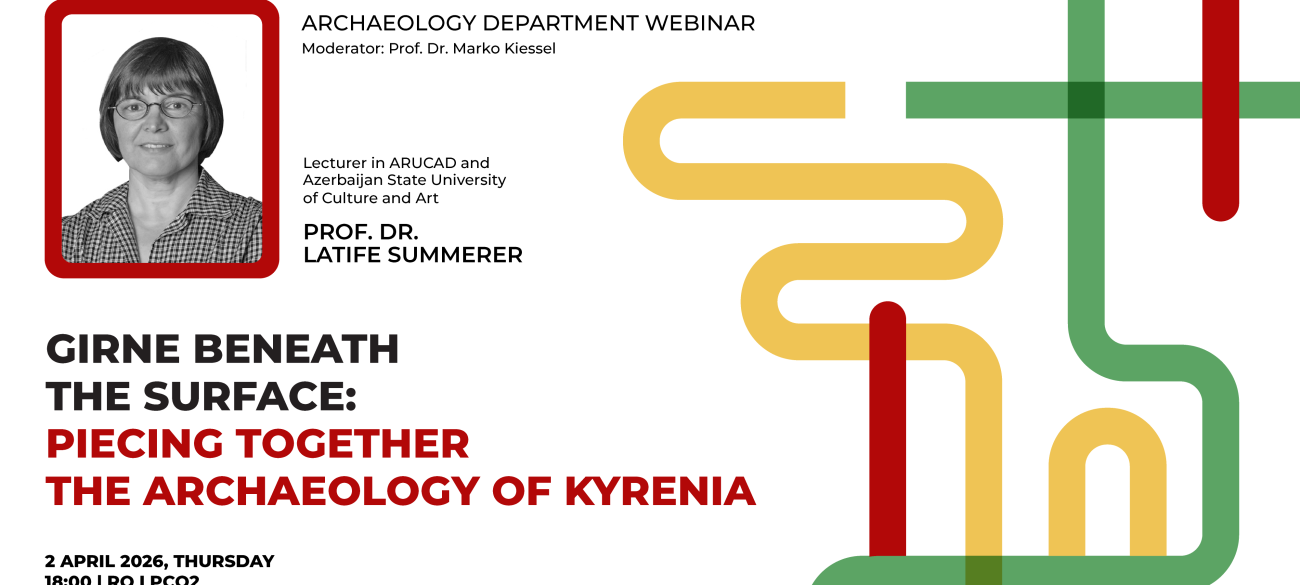
At Arkin University of Creative Arts and Design, a webinar titled “Girne Beneath The Surface: Piecing Together The Archaeology Of Kyrenia” was held on Thursday, April 2, 2026. Prof. Dr. Latife Summerer joined students at RO LPC02 to discuss the complexities of uncovering Kyrenia’s layered past and the challenges faced in archaeological research.
The seminar addressed key issues such as fragmented material evidence, gaps in historical records, and the difficulties of interpreting layers shaped by centuries of human activity. It emphasized that understanding Kyrenia’s history requires a multi-layered approach that brings together diverse sources of information rather than relying on a single discipline.
The session also explored how interdisciplinary methods—combining excavation data, architectural remains, and maritime findings—contribute to reconstructing the region’s historical narrative. Particular attention was given to the coastal and harbor context, highlighting Kyrenia’s connections to the wider Mediterranean world.
The webinar provided ARUCAD students with a comprehensive perspective on archaeological research processes, underlining the importance of interdisciplinary thinking in interpreting historical data.
The seminar addressed key issues such as fragmented material evidence, gaps in historical records, and the difficulties of interpreting layers shaped by centuries of human activity. It emphasized that understanding Kyrenia’s history requires a multi-layered approach that brings together diverse sources of information rather than relying on a single discipline.
The session also explored how interdisciplinary methods—combining excavation data, architectural remains, and maritime findings—contribute to reconstructing the region’s historical narrative. Particular attention was given to the coastal and harbor context, highlighting Kyrenia’s connections to the wider Mediterranean world.
The webinar provided ARUCAD students with a comprehensive perspective on archaeological research processes, underlining the importance of interdisciplinary thinking in interpreting historical data.